Ball Python Morphs
Genetics, Inheritance and Responsible Breeding of Ball Python Morphs
Genetics, Inheritance and Responsible Breeding of Ball Python Morphs
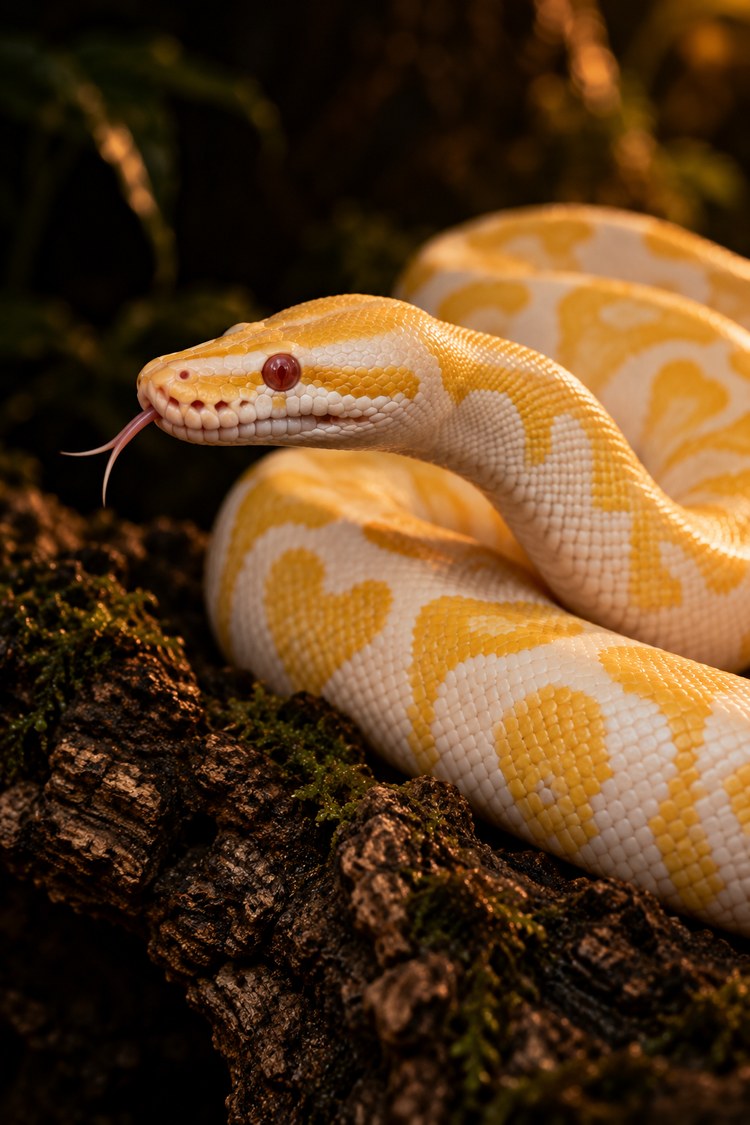
Ball pythons are one of the most genetically diverse reptiles in captivity.
From subtle pattern changes to nearly white, very dark, striped, spotted or almost patternless animals, breeders have produced thousands of combinations from a growing collection of heritable traits.
However, that diversity has also created a confusing vocabulary. Words such as morph, gene, allele, het, super, dominant, recessive, incomplete dominant, complex, combo and possible het appear in every advertisement. Some are true genetic terms. Others are hobby shorthand.
Understanding ball python morphs therefore starts with knowing the difference. This guide explains the genetics behind ball python morphs without becoming a catalog of individual mutations. We will cover specific morphs in separate Hellish Reptiles guides.
Simply put, a morph is a recognizable variation in the appearance of a ball python. A morph may change:
In the reptile hobby, the word morph is broad. In fact, it does not tell you how a trait is inherited. A visual recessive mutation, an incomplete-dominant trait, a polygenic line and a combination of several genes may all be called ball python morphs.
That is why a morph name alone does not explain the genetics, either.
These terms are related, but keepers should not use them interchangeably.
| Term | Meaning |
|---|---|
| Morph | A recognizable visual form used in the reptile hobby |
| Trait | A specific characteristic of the animal |
| Gene | A section of DNA involved in a biological function |
| Locus | The position of a gene or genetic region |
| Allele | One version of the genetic information at a locus |
| Genotype | The genetic makeup an animal carries |
| Phenotype | The characteristics we can observe |
Also, a single ball python can carry several mutations at different loci. Its final appearance results from those genes interacting with each other and with the animal’s background genetics. Sometimes more complex influences, not yet fully understood, also play a part.
This distinction is fundamental. First, genotype is what the snake carries genetically. Phenotype, on the other hand, is what the snake looks like.
Sometimes the phenotype tells us a lot about the genotype. For example, a visual recessive morph normally shows that the snake inherited the recessive allele from both parents.
However, appearance does not reveal everything. A normal-looking ball python can carry a recessive mutation without showing it. Likewise, two genetically different combinations can sometimes look surprisingly similar.
For this reason, photographs help with identification but cannot always replace lineage records or genetic testing.
Inheritance
Ball pythons inherit genetic material from both parents. For a typical autosomal locus, each offspring receives one allele from its mother and one from its father.
However, different alleles interact in different ways. The most important inheritance patterns in ball python breeding are:
As a result, the type of trait you work with determines which offspring are possible.
A simple recessive morph usually needs two copies of the recessive allele before the visual phenotype appears. An animal with only one copy generally looks normal for that trait. That carrier is heterozygous, usually shortened to het.
For example, when two confirmed hets for the same simple recessive mutation are paired, the theoretical result for each offspring is:
| Result | Probability |
|---|---|
| Visual recessive | 25% |
| Heterozygous carrier | 50% |
| Does not carry the allele | 25% |
These percentages apply to each egg independently. In other words, they do not guarantee that four hatchlings will be exactly one visual, two carriers and one non-carrier. A clutch can differ greatly from the expected ratio purely by chance.
Het is shorthand for heterozygous. In ball python breeding, people use the word most often with recessive traits.
A snake described as 100% het is known, through its parentage, breeding results or suitable testing, to carry one copy of the recessive allele.
A snake described as a 50% or 66% possible het, on the other hand, only has a statistical chance of carrying the mutation. Its own status has not necessarily been confirmed.
Clearly, that distinction matters. Therefore, a seller should never present a possible het as a confirmed carrier.
This is a common misunderstanding, though. A 66% possible het does not carry 66% of an allele. The individual either inherited the allele or it did not.
Instead, the 66% describes our chance of predicting its status correctly before testing or proving it through breeding. Once the animal is tested or proven, the answer is simple: carrier or non-carrier.
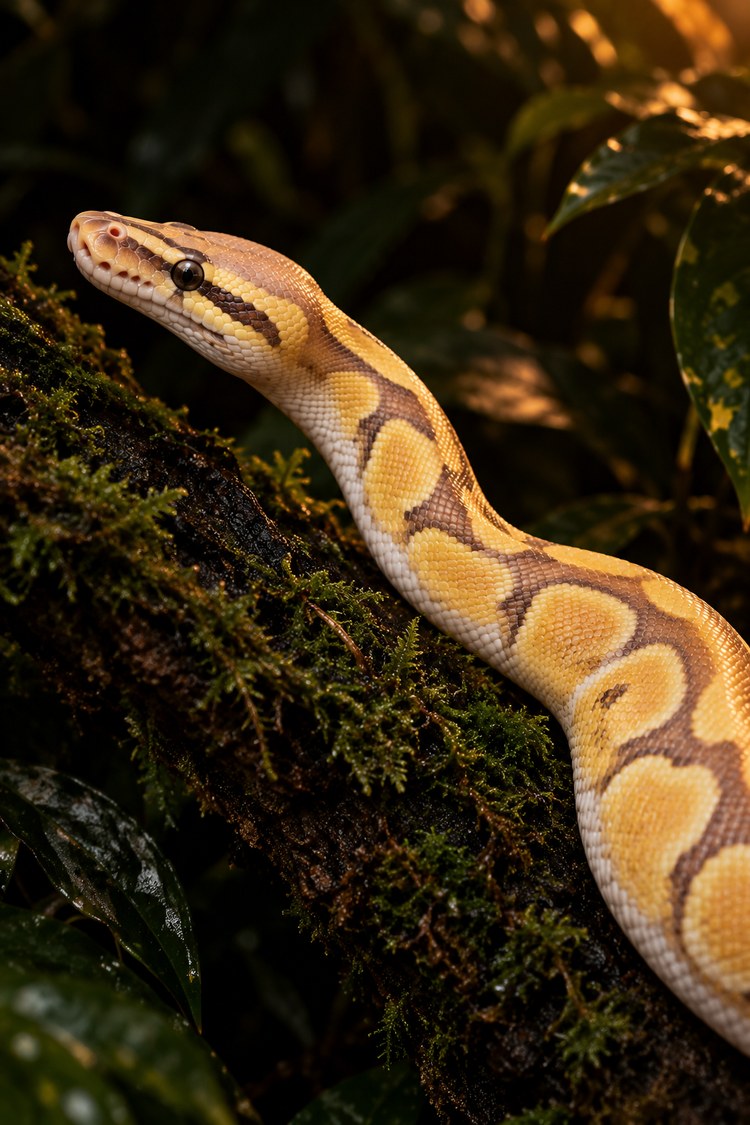
Many popular ball python morphs follow an incomplete-dominant pattern. With an incomplete-dominant mutation:
The single-copy animal is heterozygous, and the two-copy animal is homozygous. In reptile terminology, the homozygous form is often called a super.
For two heterozygous parents carrying the same incomplete-dominant allele, the theoretical result is:
| Genotype | Probability |
|---|---|
| Homozygous (super) | 25% |
| Heterozygous | 50% |
| Wild type at that locus | 25% |
Again, these percentages describe the chance for each offspring, not a guaranteed clutch.
Older ball python literature often calls single-copy visual traits co-dominant, or simply “co-dom.” In most of these cases, incomplete dominant is the more accurate genetic term.
True codominance means both alleles are fully and separately expressed in the heterozygous animal. With many familiar ball python morphs, however, the heterozygous animal has one look and the homozygous animal has another. That pattern is better described as incomplete dominance.
Still, the older term remains common in the hobby, so you will meet it regularly.
In ball python genetics, super normally refers to the homozygous form of an incomplete-dominant trait. The animal inherited the mutant allele from both parents.
However, a super is not automatically:
Some homozygous forms look dramatically different from the single-copy form. Others, by contrast, are fairly subtle. Moreover, some known genetic combinations are linked to developmental problems, reduced viability or death.
Therefore, breeding for a super should begin with understanding what that homozygous genotype actually does.
With a fully dominant trait, one copy is enough to produce the phenotype, and the homozygous form may look essentially the same.
Consequently, this creates a practical problem. If heterozygous and homozygous animals look identical, appearance alone cannot tell you whether a snake carries one copy or two. As a result, breeding records or genetic testing may be needed.
In everyday ball python breeding, however, breeders discuss true dominant traits less often than recessive and incomplete-dominant ones.
Complexes
Ball python genetics becomes more interesting when several mutations sit at the same locus. As explained above, different versions of the same locus are called alleles.
When breeders find several ball python morphs that appear to share one locus, they often group them into an allelic complex. Well-known breeder-defined complexes include:
Of course, memorizing every complex is not the important point. Understanding what a complex means is.
In practice, two traits in the same allelic complex do not behave like two mutations at completely separate loci. Instead, an offspring can inherit one allele of the complex from one parent and a different allele of the same locus from the other.
A compound heterozygote carries two different mutant alleles at the same locus. This explains why some famous combinations look distinctive even though neither parent carries two copies of the same allele.
The Blue-Eyed Leucistic complex is a good example. Combining different alleles from that complex can produce a nearly or completely white snake with blue eyes.
Knowing the genetics behind it is more useful than simply calling the animal “white.” After all, understanding the locus tells the breeder what the next generation can inherit.
A ball python listed with several morph names may carry mutations at several different loci. Breeders generally call that animal a combo. For example, a breeder may combine:
As a result, you have to consider each component separately. A long morph name does not describe one enormous new gene. It describes several genetic traits expressed together.
As more mutations are combined, visual identification becomes harder. One gene can enhance another. Another may reduce the pattern so much that a second mutation becomes hard to see. Some traits almost completely hide others, while others produce overlapping features.
Consequently, even experienced breeders sometimes misidentify a complex animal. Photographs help, but lineage and genetic testing matter more and more for high-value combinations.
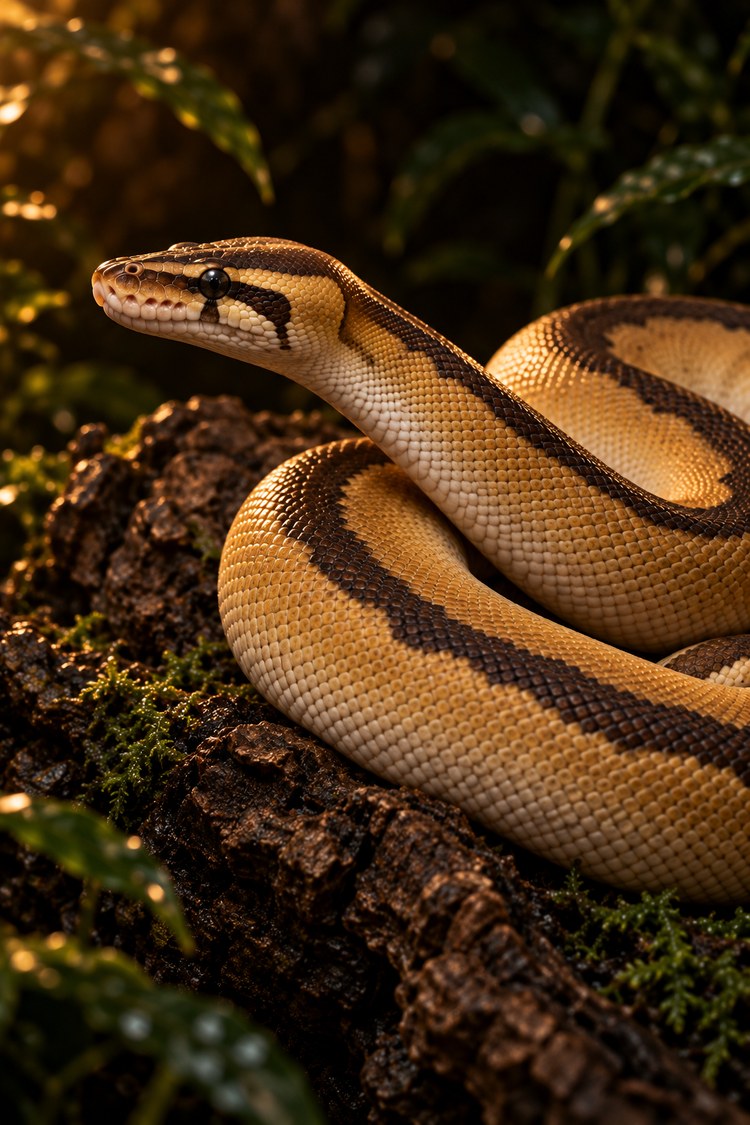
Not every difference between ball pythons fits a simple Mendelian model. Many genes influence some characteristics. Geneticists describe these as polygenic.
Breeders can select animals that show a desired feature and keep breeding toward stronger expression over many generations. This can influence:
However, polygenic traits cannot be predicted with the simple percentages used for a single recessive mutation. A Punnett square cannot tell you exactly how intense a polygenic feature will look.
Line breeding is selective breeding used to establish or strengthen characteristics within a family of animals. A successful line can become recognizable and fairly consistent.
Even so, a consistent line is not automatically a newly discovered single-gene morph. This distinction is important when you evaluate claims of new genetics. Selective breeding can produce impressive changes without one identifiable mutation causing the whole phenotype.
Breeders treat most ball python morphs as autosomal traits. In other words, their basic inheritance does not depend on sex.
However, some ball python genetics involve sex-linked inheritance. The best-known hobby example is the Banana / Coral Glow trait. With sex-linked inheritance, the sex of the parent carrying a particular form can change the expected results.
This makes record keeping especially important. We will examine sex-linked traits in their own articles rather than oversimplify them here.
First of all, a strange-looking hatchling is not automatically a new gene. Breeders often call an unusual animal with unknown genetics a “dinker” or a potential new project.
Moreover, proving a new mutation takes time. A responsible project should try to answer several questions:
A new morph should gain credibility as evidence builds up, not simply because someone named it.
To begin with, a visual pattern can suggest a mutation. Breeding can demonstrate inheritance. Molecular testing can sometimes identify the underlying DNA variant. These are three different levels of evidence.
Historically, breeders established most ball python morphs through breeding results. Breeders produced several generations, compared expected ratios with actual offspring and worked out how traits behaved. That system remains valuable. Nevertheless, ball python genetics is now entering a new phase.
The Science
For decades, proving an invisible recessive carrier often took years. A breeder might raise an animal to maturity, pair it with a visual or known carrier, hatch offspring and then judge the likely genotype from the results.
Today, targeted DNA testing from shed skin is available for a growing number of ball python traits. Better still, the process is non-invasive. Cells left in a clean shed contain DNA that can be tested for specific validated variants.
For supported traits, testing may help confirm:
Clearly, this is a major change for reptile breeding. A breeder can sometimes answer in weeks a question that used to take several years and another generation of animals.
Even so, a DNA test is not a magic scanner that lists every gene in a snake. Most available tests are targeted. In other words, the laboratory looks for a specific known variant or marker.
If no validated test exists for a trait, sending a shed will not reveal it. Test quality can also vary with how well the underlying mutation has been characterized.
Therefore, genetic testing should complement pedigrees, accurate breeding records, phenotype, proven parentage and responsible breeding judgment. It should not replace them.
For many years, the ball python community knew how many morphs were inherited without knowing the exact mutation behind them. That is beginning to change.
Researchers have now linked several familiar ball python morphs to specific pigmentation genes. A community-science study using DNA from shed skins found strong associations between:
Notably, these genes already play known roles in melanin production in other vertebrates. In addition, research on Piebald ball pythons linked the phenotype to the TFEC gene region and identified a strong candidate mutation.
This matters because ball python genetics is moving from “breeders know this is recessive” toward “we can identify the biological mechanism.”
Another major step came in 2025, when researchers published the first whole-genome assembly of Python regius. A reference genome gives researchers a genetic map of the species.
On its own, though, it does not identify every morph. However, it provides the foundation for future research. Scientists can compare DNA from animals with different phenotypes, find candidate regions, study known genes and develop more precise tests.
Combined with the huge captive population and easy DNA from shed skin, this makes ball pythons unusually useful for studying reptile coloration genetics.
Responsible Breeding
Breeders should never separate genetics from health. A mutation can create an attractive phenotype while also affecting another body system. Sometimes the effect is subtle. Sometimes it is serious. Responsible breeders must consider both.
The best scientifically documented example in ball pythons is the Spider morph and wobble syndrome. In 2022, two imaging studies compared Spider ball pythons with wild-type animals. Both found clear malformations of the inner-ear structures that control balance.
Affected snakes show typical problems, including abnormal head movements, poor coordination and difficulty orienting themselves. As a result, wobble is more than a cosmetic quirk. It is a welfare concern tied to the phenotype.
The Spider example is not the only reason to research a pairing before producing it. Within the hobby, keepers have repeatedly reported certain homozygous forms and combinations showing:
Admittedly, the evidence behind each claim varies. Some are strongly supported by repeated breeding results. Others rest mainly on breeder observations rather than controlled studies. For this reason, sellers and breeders should always make that distinction clear.
Still, uncertainty is no reason to ignore repeated welfare concerns. When a combination is consistently linked to serious defects, the responsible choice is to avoid producing it while the evidence develops.
Breeding decisions should consider more than rarity and price. Instead, judge a responsible breeding animal on:
A spectacular snake with poor health or problematic genetics is not automatically a valuable breeder. Healthy animals come first, so start with solid husbandry from our ball python care guide.
The phenotype should never matter more than the animal carrying it.
Above all, popular mutations can spread quickly through the captive population. When a trait starts with only one or a few founder animals, early breeders may have to work with a narrow gene pool.
Repeated close breeding can increase homozygosity across the whole genome, not just at the desired morph locus. That can expose unwanted recessive variants.
Outcrossing, by contrast, brings in unrelated genetic material while keeping the target mutation for future generations. This may slow a project down. However, it can also make the population healthier and more sustainable.
In the end, fast genetic progress and good breeding are not always the same thing.
DNA testing does not make pedigree records obsolete. Rather, it makes good records more powerful. A useful breeding record for ball python morphs should include:
If a trait is later reclassified, these records let breeders re-evaluate older animals accurately. Without records, by contrast, valuable information disappears.
A ball python morph calculator can be extremely useful. For established Mendelian traits, it works out expected genotypes and phenotypes far faster than doing every cross by hand.
But a calculator does not judge whether a pairing is responsible. It cannot know:
In short, the calculator answers “What could these genetics produce?” It does not answer “Should these animals be bred?” That second question still belongs to the breeder.
Furthermore, morph terminology is not permanent. A mutation first thought to be an independent gene may later prove allelic with another. Two similar-looking ball python morphs may turn out to be genetically different. Meanwhile, two different names may prove to be alleles of the same gene.
A trait once assumed to be dominant may be reclassified as incomplete dominant. Molecular testing may also show that an animal sold under one description actually carries another allele.
This is not evidence that genetics has failed. On the contrary, it shows that our understanding has improved. Good breeders update their terminology when the evidence changes.
Meanwhile, new ball python projects continue to appear. Breeders still report candidate mutations, produce possible super forms and test suspected allelic relationships. At the same time, the standard of proof keeps rising.
Modern breeders increasingly have access to:
That makes 2026 very different from the early years of morph breeding. Twenty years ago, proving a project depended almost entirely on breeding results and photographs. Today, the strongest projects combine breeding evidence, pedigrees, molecular testing and health data.
First, do not buy a morph on appearance alone. Instead, ask:
A breeder who understands the genetics should be able to explain them clearly. After all, complicated genetics do not require complicated sales language.
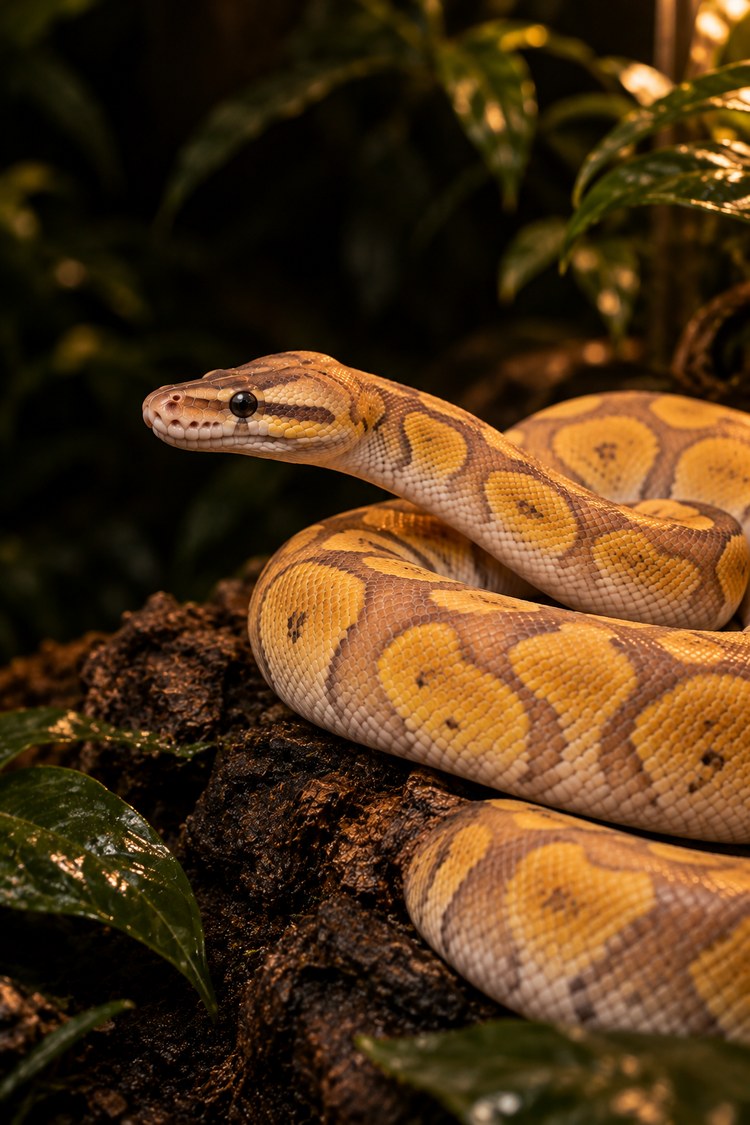
What is a ball python morph?
A morph is a recognizable color, pattern or pigment variation within Python regius. It is a hobby term and does not describe a specific inheritance pattern.
Are ball python morphs different species?
No. All ball python morphs are variations within one species, Python regius.
What does het mean in ball pythons?
Het means heterozygous. It usually describes a snake that carries one copy of a recessive mutation without showing it.
What is a possible het?
A possible het has a statistical chance of carrying a recessive mutation, but its status has not been confirmed.
What does "super" mean?
Super usually means the homozygous form of an incomplete-dominant trait: the snake inherited the allele from both parents.
Can a DNA test tell me every morph my snake carries?
No. Current tests target known mutations, so they cannot reveal unknown or untested traits.
Can two normal-looking ball pythons produce a visual morph?
Yes, if both carry the same recessive mutation. Two normal-looking hets can produce visual recessive offspring.
Are all ball python morphs healthy?
Not necessarily. Many morphs have no known health problem, while others are linked to specific issues. So, judge each mutation and pairing individually.
Originally, ball python breeding began with observation. A breeder found an unusual animal, bred it, studied its offspring and tried to understand the pattern. That method created much of the diversity we know today.
Today, however, the field is changing. We now have identified pigmentation genes, targeted DNA tests from shed skin, large pedigree records and a published Python regius genome.
The next generation of ball python breeding should combine breeders’ experience with better genetic evidence. The goal should not simply be more combinations. It should be understanding what we are producing.
Know the genotype. Preserve the lineage. Protect the health of the animal. Then build the project.

 Lilly White Crested Gecko: Genetics, Identification and Responsible Breedin...