Crested Gecko Care:
A Complete Guide to Healthy Husbandry and Common Issues

A Complete Guide to Healthy Husbandry and Common Issues
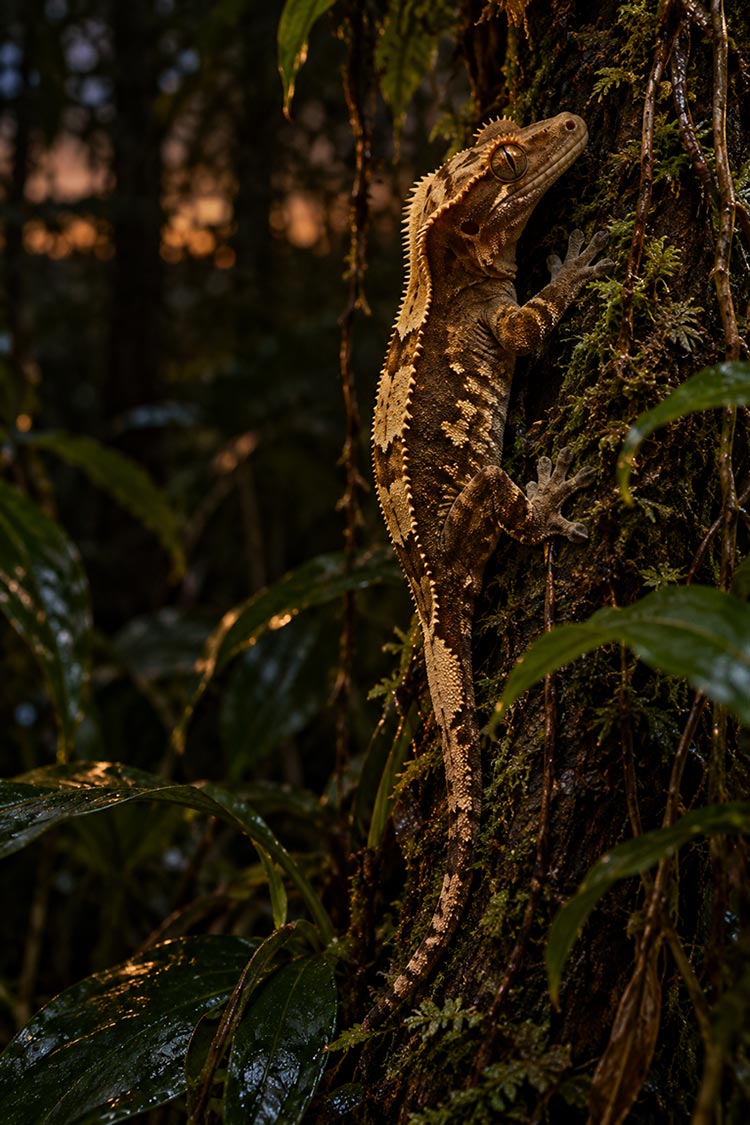
Crested gecko care is often described as easy, but “easy” should not mean basic. A crested gecko can tolerate small mistakes better than many reptiles, yet long-term health still depends on getting a few important things right: temperature, humidity, diet, enclosure design, lighting, hydration, and daily observation.
The crested gecko, Correlophus ciliatus, is an arboreal gecko native to New Caledonia. It spends much of its life climbing through vegetation and sheltered forest structure and becomes most active after daylight fades. In captivity, that natural history tells us almost everything we need to know about building a suitable environment.
With proper care, a crested gecko can live for 15–20 years or longer, making it a long-term commitment rather than a temporary pet.
| Care factor | Recommended approach |
|---|---|
| Adult enclosure | Tall enclosure; about 18 × 18 × 24 in is a practical baseline, with 18 × 18 × 36 in or larger offering more usable climbing space |
| Day temperature | Generally 72–78°F, with access to a modest warmer area |
| Night temperature | Approximately 65–72°F is normally appropriate |
| Humidity | Allow a cycle: roughly 70–80% after misting, falling toward 50–60% before the next misting |
| Lighting | Consistent 10–12 hour day/night cycle |
| UVB | Low-level UVB is beneficial when correctly installed |
| Diet | Complete crested gecko diet as the staple; suitable insects as supplemental food |
| Water | Fresh drinking water plus misted droplets |
| Housing | Individual housing is the safest default |
| Adult lifespan | Commonly 15–20 years with appropriate care |
These numbers are useful starting points, but a terrarium should provide choices rather than one identical condition everywhere.
Habitat
Crested geckos are built for vertical space. Their feet, claws, jumping ability, and prehensile tail all help them move through branches and vegetation.
For an adult, a vertical enclosure around 18 × 18 × 24 inches is a reasonable starting point. However, more height is valuable. An enclosure around 18 × 18 × 36 inches or larger provides considerably more room for climbing, thermoregulation, and enrichment.
Size alone does not make a good habitat. A large empty glass box is still a poor enclosure.
Use branches, cork, vines, foliage, elevated resting areas, and hiding locations throughout the enclosure. Include horizontal as well as diagonal branches. The gecko should be able to move from the bottom to the top without relying only on bare glass.
Dense foliage also allows the animal to choose between exposed and sheltered areas. A healthy enclosure should give the gecko opportunities to climb, hide, jump, rest, and choose different microclimates.
For ordinary pet keeping, one crested gecko per enclosure is the safest approach.
Two males should never be housed together. Females can also compete, bully one another, or experience chronic stress that is easy to miss.
Male-and-female housing introduces repeated breeding pressure and is not appropriate simply because the animals appear to tolerate each other.
Controlled pairing for breeding is different from permanent cohabitation. Unless you have a specific breeding purpose and understand the risks, individual housing removes many unnecessary problems.
Temperature is one of the most misunderstood parts of crested gecko care.
Crested geckos do not need the intense basking temperatures used for desert reptiles. However, they are still ectotherms and actively regulate their body temperature.
For most enclosures, a general daytime range of about 72–78°F works well. A slightly warmer area in the upper 70s can provide additional choice, while cooler areas should remain available lower in the enclosure.
Nighttime temperatures can normally fall into the mid to upper 60s or low 70s°F.
A published laboratory study found that crested geckos actively selected body temperatures roughly between 24 and 28°C, or 75 and 82°F. This does not mean the whole enclosure should be kept at 82°F. Instead, it reinforces the importance of providing a gradient so the animal can choose.
Crested gecko enclosures can overheat quickly. Prolonged high temperatures are far more dangerous than a modest nighttime temperature drop.
If supplemental heat is necessary, use a controlled overhead heat source connected to a reliable thermostat. Never guess temperature by touching the enclosure.
Use digital thermometers in more than one area so you know what the gecko actually experiences.
A common mistake is trying to keep a crested gecko enclosure constantly wet.
Humidity should rise and fall naturally.
After an evening misting, humidity may rise to approximately 70–80%. Over the following hours, the enclosure should gradually dry and may fall toward 50–60% before the next misting.
That drying period matters.
Constant moisture combined with poor ventilation can encourage bacterial or fungal growth and may contribute to skin and respiratory problems. On the other hand, conditions that remain too dry can contribute to dehydration and incomplete shedding.
Use a digital hygrometer rather than relying on how damp the enclosure looks.
Misting also leaves droplets on leaves and surfaces that geckos commonly lick. However, misting should not replace drinking water. Keep a small dish of clean, fresh water available at all times.
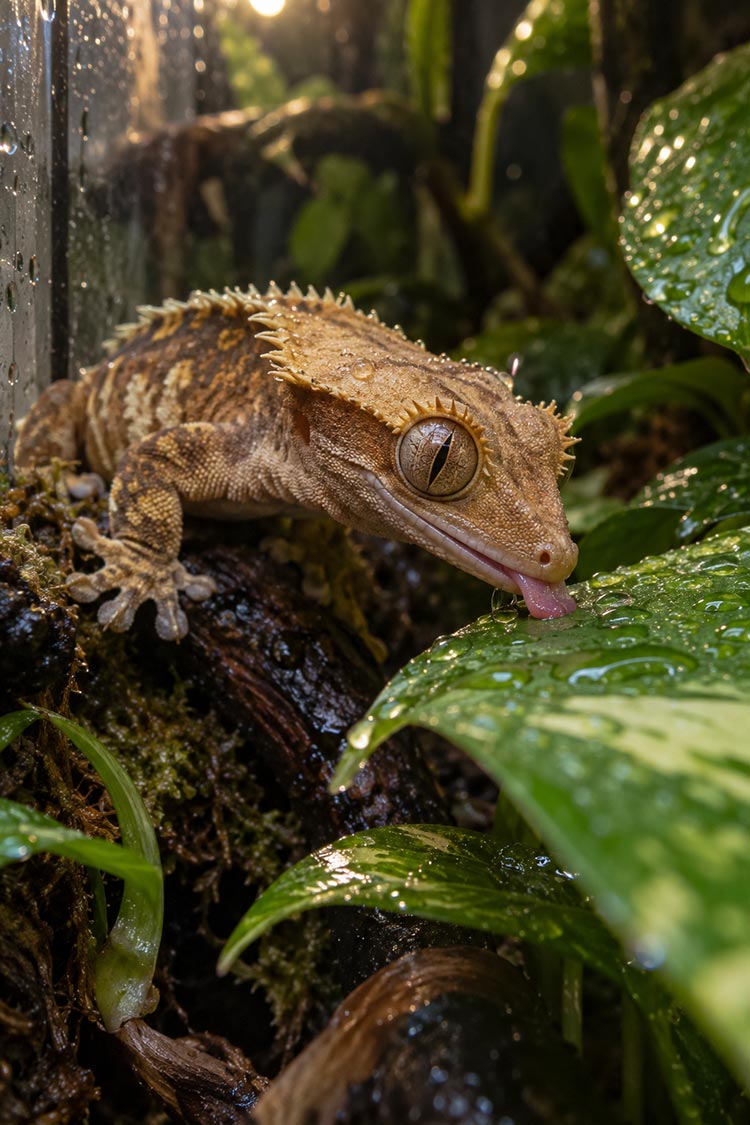
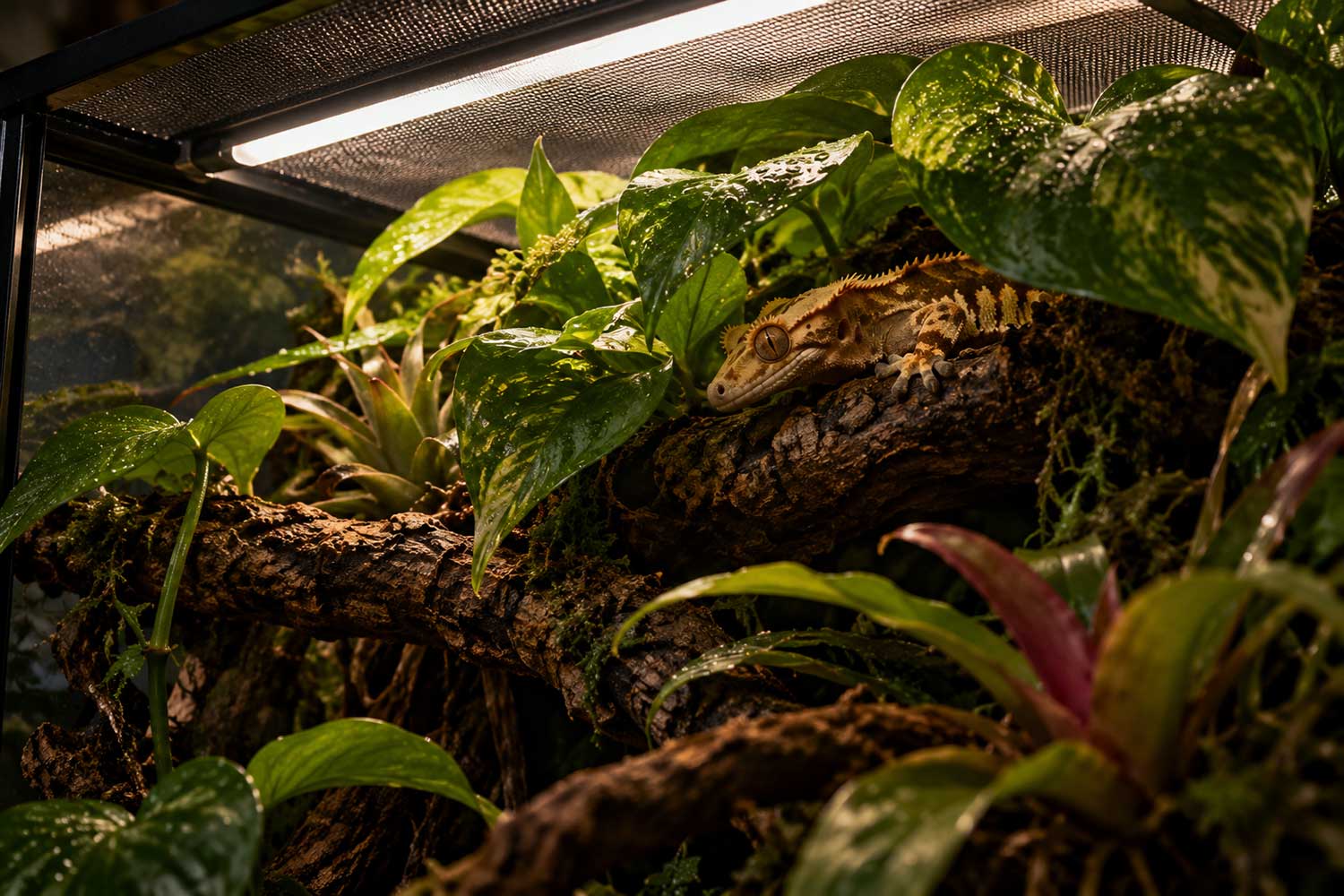
Crested geckos need a consistent day/night cycle even though they are most active when light levels are low.
A 10–12 hour daytime light period followed by darkness at night works well for most captive setups.
Do not use bright red, blue, or other visible “night lights” throughout the night. Darkness is part of the animal’s normal daily rhythm.
Crested geckos have historically been kept successfully without UVB when they receive adequate dietary vitamin D3. However, that does not mean UVB has no value.
Modern reptile husbandry increasingly favors providing low-level UVB exposure for crested geckos. UVB allows natural vitamin D3 synthesis and supports calcium metabolism while giving the animal another environmental choice.
The key is low intensity plus shade.
A crested gecko should always be able to retreat into foliage and escape direct exposure.
Do not choose UVB solely by a percentage printed on a bulb. Fixture type, distance, mesh, bulb design, and placement all affect the amount of UVB reaching the animal.
Also remember that ordinary glass and many plastics block UVB.
Feeding & Daily Care
Nutrition is another area where crested gecko care has changed substantially over the years.
Plain mashed fruit should not be the primary diet.
Today, a reputable complete crested gecko diet, usually sold as a powder mixed with water, is the simplest and most reliable staple. These formulas are designed to provide protein, carbohydrates, minerals, vitamins, calcium, and vitamin D in appropriate proportions.
Young geckos generally eat more frequently because they are growing. Adults can usually be offered prepared diet several times per week. Follow the manufacturer’s instructions because formulas differ.
Remove old prepared food before it spoils.
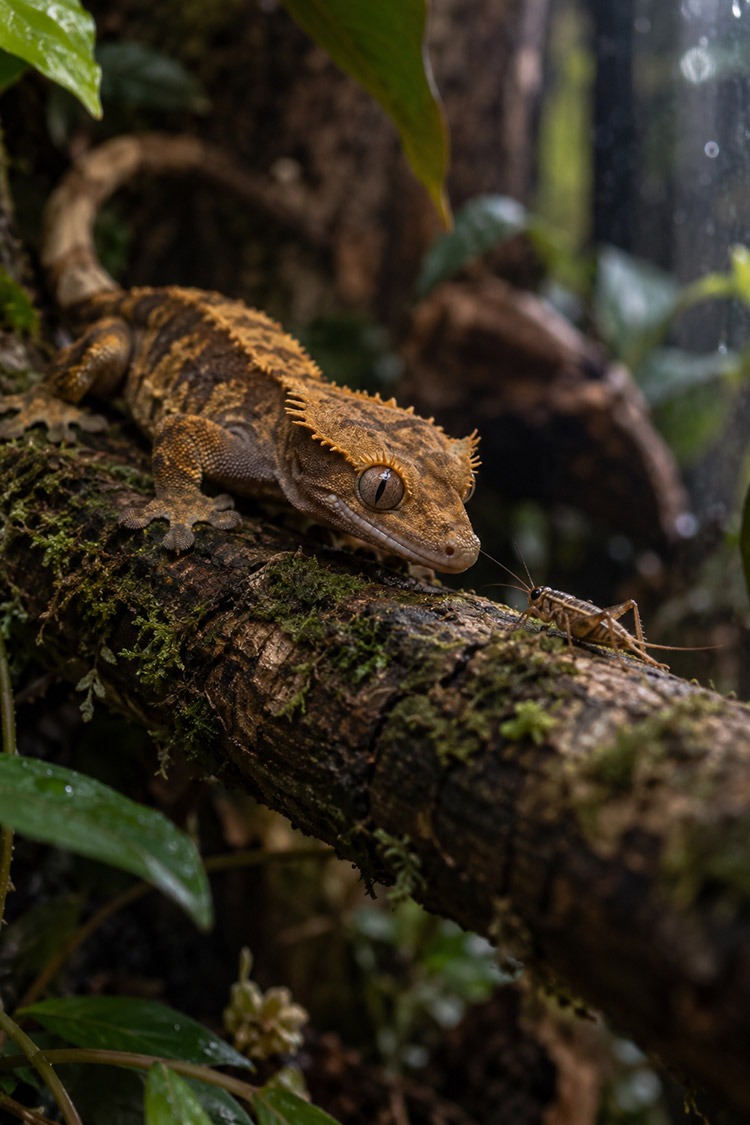
Crested geckos are omnivorous, and invertebrates form part of their natural diet.
Appropriately sized insects can therefore be a useful source of nutrition and behavioral enrichment. Crickets and suitable roaches are common options.
Feed well-nourished feeder insects and use an appropriate calcium supplement when necessary.
If your gecko already eats a nutritionally complete prepared diet, avoid randomly adding extra vitamins or calcium to the prepared food. More supplementation is not automatically better.
Supplementation should make sense in the context of the whole diet, UVB exposure, age, growth, and reproductive status.
Fruit can be offered occasionally, but it should not replace a balanced complete diet.
Several substrate systems can work when the rest of the husbandry is correct.
Paper towel is particularly useful for:
Well-managed naturalistic or bioactive substrates can also work for established healthy geckos.
Avoid substrates made from materials that can cause injury or gastrointestinal obstruction if swallowed.
Loose substrate does not automatically cause impaction. Risk increases when an animal is dehydrated, kept too cool, fed carelessly, or allowed to ingest large amounts of inappropriate material.
Using an elevated feeding ledge also reduces accidental substrate ingestion during prepared-diet feeding.
Good crested gecko care is mostly consistent routine.
Remove feces and old food promptly. Wash food and water dishes regularly. Replace drinking water with fresh water every day.
Clean heavily soiled surfaces rather than allowing organic material to build up.
Bioactive enclosures still require maintenance. A cleanup crew does not make an enclosure self-cleaning.
Check branches, plants, hiding areas, ventilation, thermometers, hygrometers, heating equipment, and lighting regularly.
Small husbandry problems are easier to correct before they become health problems.
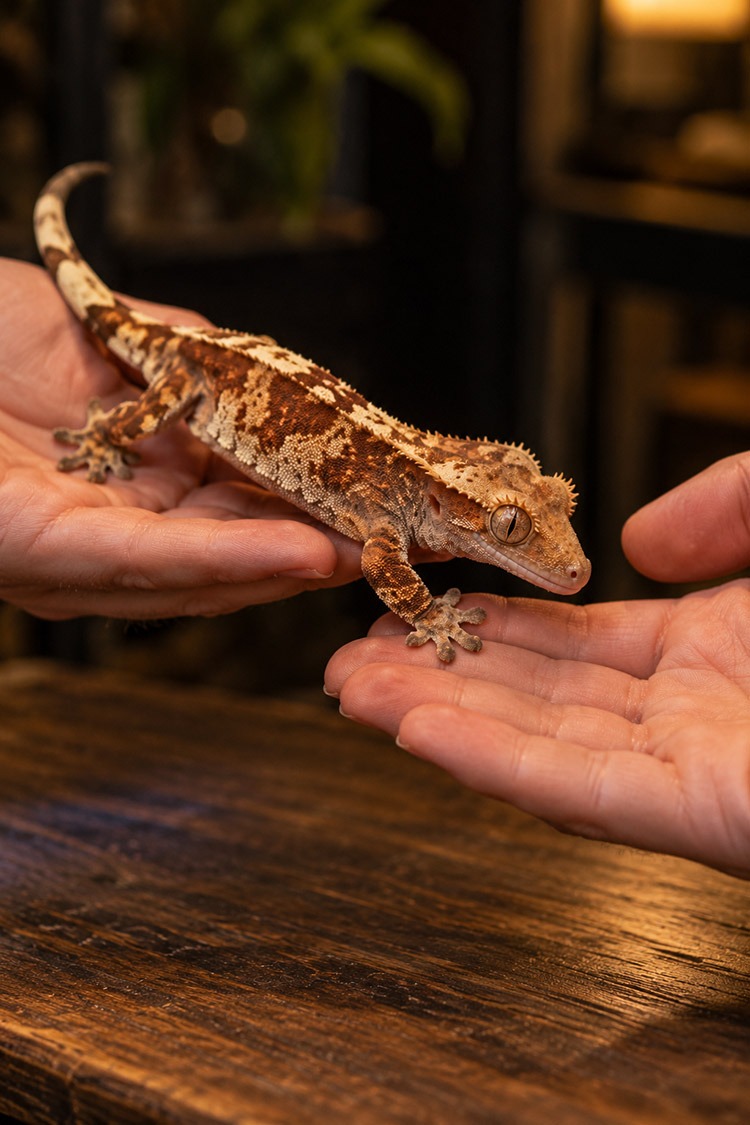
Most crested geckos tolerate gentle handling once they become accustomed to their keeper.
Allow a new animal time to settle before handling it frequently. It is more important for the gecko to begin eating and using the enclosure normally than to become comfortable with handling immediately.
When handling, let the animal walk from one hand to the other. Keep your hands relatively low over a safe surface because crested geckos can jump without warning.
Never restrain a crested gecko by its tail.
The tail can detach as a defensive response, and unlike the tails of many other gecko species, a crested gecko’s tail does not regenerate.
Health
Good husbandry prevents many of the health problems seen in captive reptiles. Still, even a well-kept gecko can become sick.
The most useful skill is recognizing a change from what is normal for your animal.
Dehydration may occur when humidity stays too low, drinking opportunities are inadequate, temperatures are excessive, or illness reduces normal water intake.
Possible signs include sunken-looking eyes, abnormal skin appearance, lethargy, reduced appetite, and unusually dry feces.
Check temperature, humidity, water availability, and misting first. Significant dehydration or an animal that remains weak needs veterinary attention.
Incomplete shedding, or dysecdysis, commonly appears around the toes, tail, or other narrow areas.
Low humidity can contribute, but retained shed may also occur because of nutritional problems, disease, parasites, or other husbandry issues.
Do not pull firmly attached skin from delicate toes.
Correct the underlying environmental problem and seek veterinary help if retained skin constricts a toe, causes swelling, or repeatedly occurs.
Metabolic bone disease is one of the most important preventable disorders in captive reptiles.
The common nutritional form develops when calcium metabolism fails because of factors such as an inappropriate calcium-to-phosphorus balance, inadequate vitamin D3, insufficient UVB exposure, or poor overall husbandry.
Possible signs include a soft or abnormal jaw, bent limbs, weakness, tremors, difficulty climbing, spinal or tail deformities, and fractures.
Once obvious skeletal changes appear, this is not something to treat by simply adding more calcium to the food.
A reptile veterinarian should evaluate suspected metabolic bone disease.
Prevention is much easier: use a nutritionally complete diet, supplement insects correctly, provide appropriate temperatures, and consider properly installed low-level UVB.
Crested geckos tolerate moderate temperatures well but do poorly in sustained excessive heat.
Heat stress may cause unusual lethargy, frantic attempts to escape, loss of coordination, open-mouth breathing, or collapse.
This is one reason every heat source must be controlled by a thermostat.
A gecko showing serious symptoms after overheating needs prompt veterinary attention.
One missed meal does not automatically mean a crested gecko is sick.
Appetite may change during shedding, after relocation, during seasonal changes, or after stress.
Body weight tells you much more than an empty food bowl.
Weigh your gecko periodically on a gram scale and keep a simple record. Continued weight loss, persistent refusal to eat, lethargy, abnormal feces, or other symptoms deserve investigation.
Foreign material, inappropriate substrate, dehydration, low temperatures, large food items, or disease can interfere with normal gastrointestinal function.
Warning signs can include abdominal swelling, straining, reduced appetite, abnormal posture, or an unusual absence of feces.
Do not attempt aggressive home treatments for a suspected obstruction. Veterinary imaging may be needed to determine what is actually happening.
Crested geckos can carry gastrointestinal parasites, and not every parasite causes obvious disease.
Problems become more concerning when abnormal feces occur with weight loss, reduced appetite, poor growth, dehydration, or lethargy.
A reptile veterinarian can perform a fecal examination when parasite infection is suspected.
New reptiles should be kept separately from established animals during their initial observation period.
Incorrect environmental conditions can increase the risk of infection.
A persistently wet enclosure with poor ventilation is not the same thing as a healthy humid environment. Low temperatures, sanitation problems, nutritional deficiencies, and other stressors can also contribute.
Mucus, bubbles around the mouth or nose, labored or open-mouth breathing, unexplained skin lesions, swelling, or rapidly worsening behavior require veterinary attention.
Do not attempt to treat suspected bacterial or fungal infections with leftover medications.
Tail loss looks dramatic, but an uncomplicated tail drop is usually not a medical emergency.
Crested geckos do not regrow their tails. Most tailless animals adapt extremely well and continue eating, climbing, breeding, and behaving normally.
Keep the enclosure clean while the area heals. Contact a veterinarian if there is continued bleeding, swelling, discharge, or another sign of infection.
Some crested geckos repeatedly sleep upside down on vertical glass, allowing the tail to fall forward over the body. Keepers commonly call the resulting abnormal tail position “floppy tail syndrome.”
The exact cause and significance are not completely established, and a bent or abnormal tail should not automatically be diagnosed as metabolic bone disease.
Provide sturdy horizontal resting surfaces as well as vertical climbing structures. If the pelvis, spine, movement, or tail position appears abnormal, have a reptile veterinarian evaluate the animal.
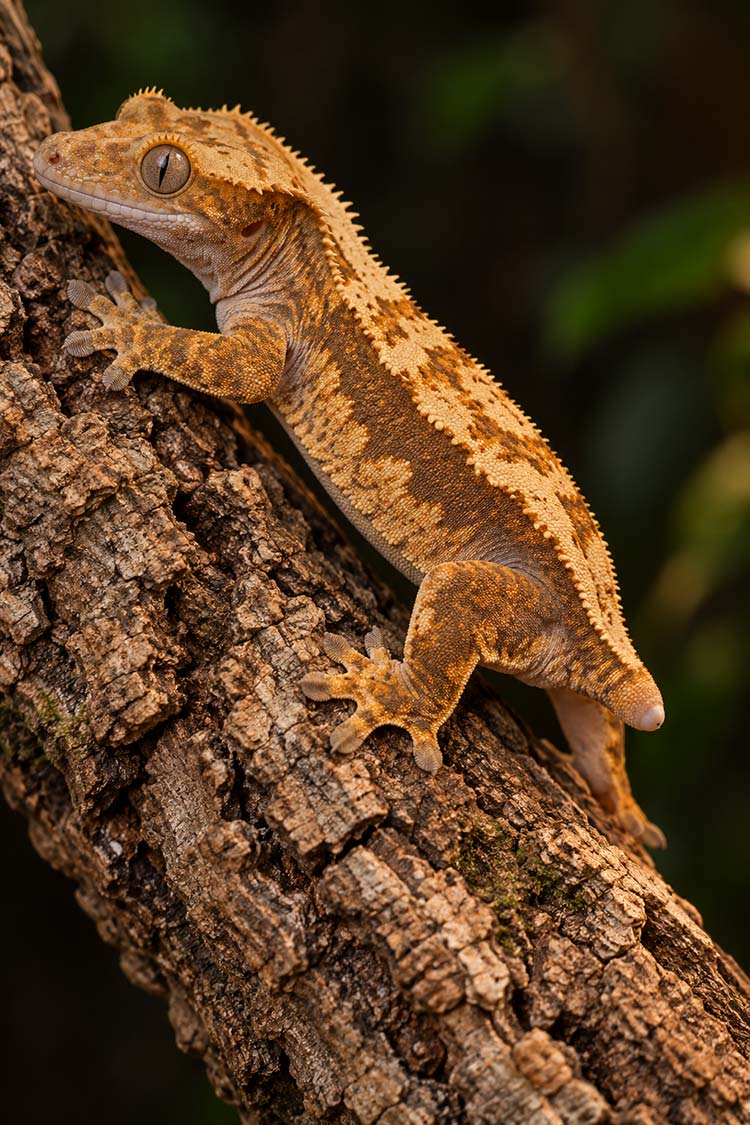
Do not judge health from appetite alone.
Learn your gecko’s normal behavior and monitor body condition, climbing ability, grip strength, feces, urates, shedding, activity, and weight.
A simple weight record can reveal gradual changes that are difficult to notice visually.
Healthy reptiles can hide disease surprisingly well. A consistent change from the animal’s normal pattern matters more than any single isolated behavior.
Seek help from a reptile-experienced veterinarian if your crested gecko develops persistent weight loss, severe lethargy, breathing difficulty, repeated abnormal feces, significant swelling, discharge, neurological signs, major injury, inability to climb normally, suspected metabolic bone disease, prolapse, or rapid deterioration.
A veterinarian should also evaluate an animal that simply does not seem right when the change persists.
Correct husbandry is essential, but husbandry adjustments are not a replacement for diagnosis when an animal is genuinely ill.
Do crested geckos need heat?
Sometimes. If the room already provides appropriate temperatures, additional heating may be unnecessary. If heating is needed, provide gentle overhead heat controlled by a thermostat rather than heating the entire enclosure uniformly.
What humidity should a crested gecko have?
Think of humidity as a cycle rather than a fixed number. Humidity can rise to around 70–80% after misting and then gradually fall toward roughly 50–60%. The enclosure should not remain wet continuously.
Do crested geckos need UVB?
They can survive without UVB when a properly formulated diet supplies adequate vitamin D3. However, correctly installed low-level UVB offers physiological and behavioral benefits and is a useful part of modern husbandry.
Can crested geckos eat only fruit?
No. Plain fruit does not provide a reliably balanced long-term diet. A nutritionally complete crested gecko diet should form the staple, with suitable insects and occasional fruit used as appropriate additions.
Can two crested geckos live together?
Individual housing is the safest default. Cohabitation creates risks of aggression, competition, stress, injury, and unwanted breeding, even when obvious fighting is not seen.
Does a crested gecko’s tail grow back?
No. Once a crested gecko drops its tail, it does not regenerate. Fortunately, most tailless crested geckos adapt very well.
Crested geckos are hardy animals, but they should not be kept on the assumption that they can thrive under almost any conditions.
Good husbandry gives the animal choices: warmer and cooler areas, humid periods and drying periods, exposed climbing areas and secure cover, complete nutrition, fresh water, and enough space to behave naturally.
Most importantly, observe the individual animal.
The numbers in a care guide provide a framework. Your gecko’s weight, behavior, body condition, appetite, movement, shedding, and overall condition tell you whether that framework is working.
 Crested Gecko Morphs: Understanding Genetics, Genes and Modern Breeding