Best Plants for Reptile Terrariums
Safe, Hardy Plants for Reptile Terrariums That Actually Work

Safe, Hardy Plants for Reptile Terrariums That Actually Work
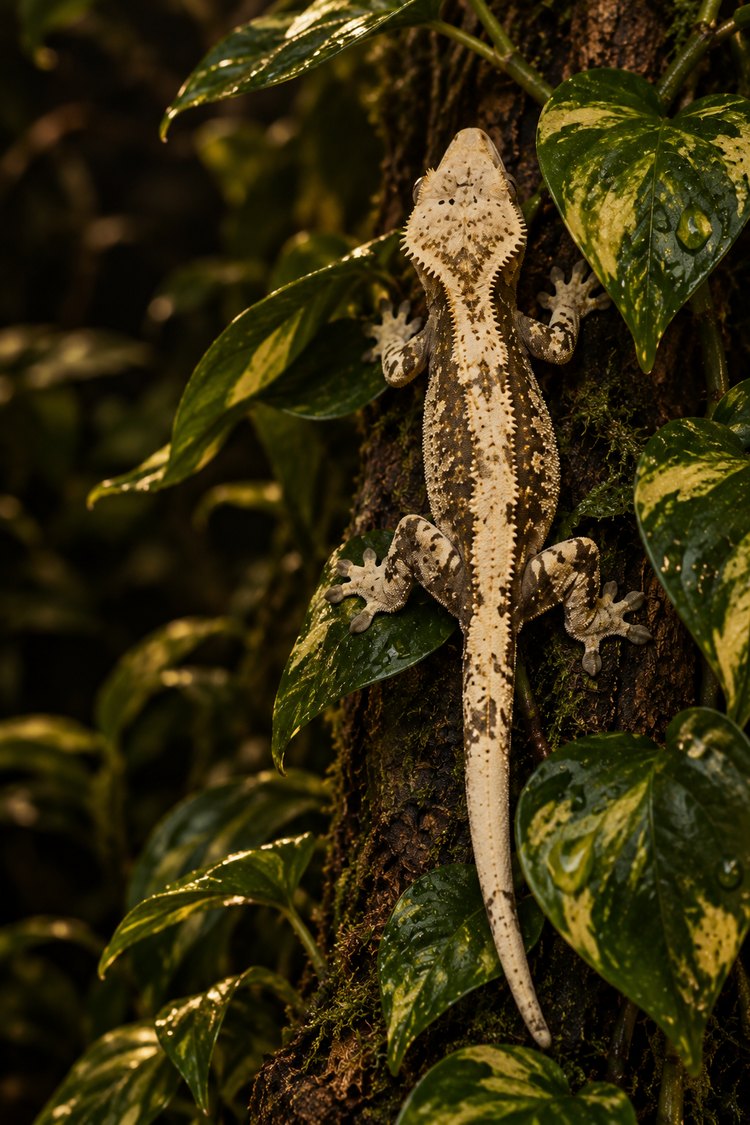
Live plants can transform a reptile enclosure.
They soften hard surfaces, create visual barriers and hold water droplets. They also provide shade, help build humid microclimates and make an enclosure feel like a real habitat instead of a decorated glass box.
However, the best plants for reptile terrariums are not always the prettiest plants at the garden center. A plant must survive the same temperatures, humidity, light, substrate and daily traffic as the animal beside it. A delicate tropical plant may look perfect for three weeks and then collapse under a ball python. A succulent may slowly rot in a misted gecko enclosure. Meanwhile, a common houseplant may grow well but contain compounds that make it a poor choice for an animal likely to eat it.
So the right question is not “Is this a terrarium plant?” Instead, ask: “Does this plant fit this animal and this enclosure?”
The word terrarium covers very different environments.
A crested gecko enclosure has high humidity at night, followed by drying during the day. A day gecko terrarium combines warmth, strong light, UVB, vertical structure and regular misting. A ball python enclosure needs humid soil without soaked roots, and every plant must survive a heavy snake moving through it. An arid gecko enclosure needs the opposite: strong drainage, bright light and long dry periods.
A plant chosen without these differences in mind rarely succeeds. Therefore, start with four questions:
Only after these questions should appearance decide.
This guide is written for insect-eating and meat-eating reptiles such as geckos and snakes. Plant-eating reptiles need a much stricter list, based on what is safe for that species to eat.
| Plant | Best use | Environment | Durability |
|---|---|---|---|
| Pothos (Epipremnum aureum) | Trailing cover, climbing backgrounds | Tropical, humid | Excellent |
| Spider plant (Chlorophytum comosum) | Dense mid-level cover | Tropical, moderate | Very good |
| Neoregelia bromeliads | Elevated planting, water-holding rosettes | Tropical, humid | Good |
| Peperomia | Compact foreground planting | Tropical, moderate | Good |
| Fittonia | Colorful ground cover | Warm, humid | Delicate |
| Boston fern (Nephrolepis exaltata) | Dense lower foliage | Tropical, humid | Moderate |
| Creeping fig (Ficus pumila) | Living backgrounds | Tropical, humid | Excellent once established |
| Prayer plants (Goeppertia, Maranta) | Large decorative leaves | Tropical, humid | Moderate |
| Dracaena (e.g. ‘Janet Craig’) | Upright structure | Tropical, moderate | Very good |
| Dwarf umbrella tree (Schefflera arboricola) | Sturdy perching foliage | Tropical, moderate | Very good |
| Air plants (Tillandsia) | Mounted accents | Bright, airy | Good |
| Snake plant (Dracaena trifasciata) | Strong vertical structure | Moderate to dry | Excellent |
| Zebra haworthia (Haworthiopsis attenuata) | Compact arid planting | Dry, semi-arid | Very good |
| Gasteria | Low succulent structure | Dry, semi-arid | Very good |
No single plant wins for every enclosure. Each one earns its place for a different reason.
Tropical Plants
Most planted reptile enclosures are tropical. These plants handle warmth and humidity well, as long as their roots can still drain.
If one plant has earned its reputation in reptile keeping, it is pothos. Epipremnum aureum grows quickly, tolerates pruning and roots easily from cuttings. It also climbs backgrounds, trails from high pots and recovers from damage better than most ornamental plants.
For crested geckos and other arboreal species, mature pothos forms broad leaves and dense tangles that make excellent cover. It tolerates a wide range of light, but stronger plant lighting gives healthier growth and larger leaves.
Pothos works especially well around cork backgrounds, in raised planting pockets, across branches and along walls. Prune it regularly, or it will smother slower plants.
Pothos caution: pothos contains insoluble calcium oxalate crystals, which irritate the mouth and gut when chewed. It suits reptiles that do not eat leaves, but it is not an edible plant. For plant-eating species, choose species-specific edible plants instead.
The spider plant, Chlorophytum comosum, is ideal when you want something hardy without the aggressive growth of pothos. Its long, arching leaves create cover without blocking the view.
Spider plants tolerate moderate light, humid air and occasional drying. Mature plants also produce hanging plantlets that add another layer of greenery. Use them around the middle and lower levels of a tropical terrarium. A large snake can still flatten one, but a climbing gecko rarely harms an established plant.
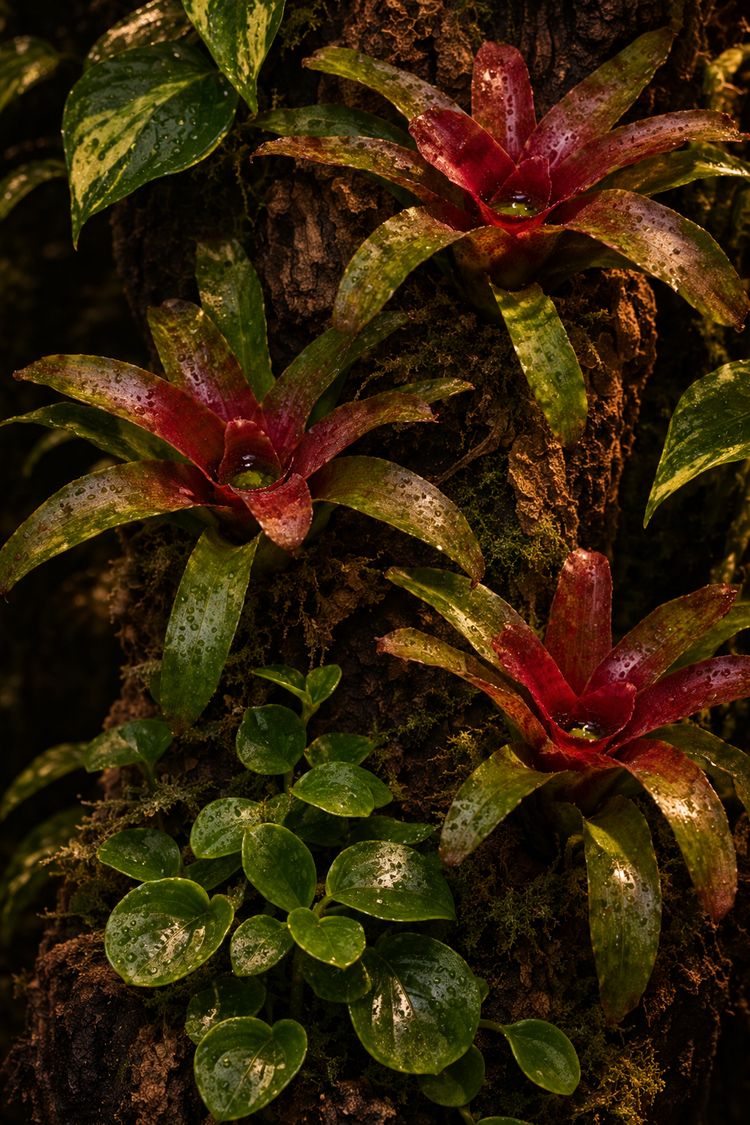
Few plants look more natural in an arboreal enclosure than bromeliads. Neoregelia species and cultivars are especially useful. Their compact rosettes fit into cork hollows, branch forks and background pockets where rooted plants would be awkward.
Many bromeliads hold water between their leaves. This gives small arboreal animals extra drinking spots, but flush the water regularly so it stays clean. Bromeliads prefer bright light and good airflow. Their roots should drain freely, even though the central cup holds water.
Peperomia suits smaller enclosures particularly well. Species such as Peperomia obtusifolia stay compact, have thick, attractive leaves and handle warm tropical setups. Because they grow slowly, they are easier to manage than pothos.
Use them on the enclosure floor, in sheltered pockets, beneath taller plants and around cork. Peperomia needs good drainage. In fact, constantly wet soil kills it faster than humid air ever will.
Fittonia, the nerve plant, loves humid display terrariums. Its compact growth and bright leaf veins make it an excellent foreground plant around rocks, roots and shaded corners.
Fittonia is not tough, though. A small gecko moves through it without much damage, but a ball python will flatten it for good. So use it with lightweight animals, or protect it from heavy traffic. It also dislikes strong direct light and prefers bright, indirect light.
Boston fern, Nephrolepis exaltata, creates a soft mass of layered fronds that few plants can match. It suits tropical reptiles that like dense cover at ground or mid level.
It prefers high humidity, moist but well-drained soil, warmth and filtered light. Because the plant can grow large, compact cultivars are more practical. The fronds are too delicate for heavy animals, but they make excellent cover beneath sturdier branches.
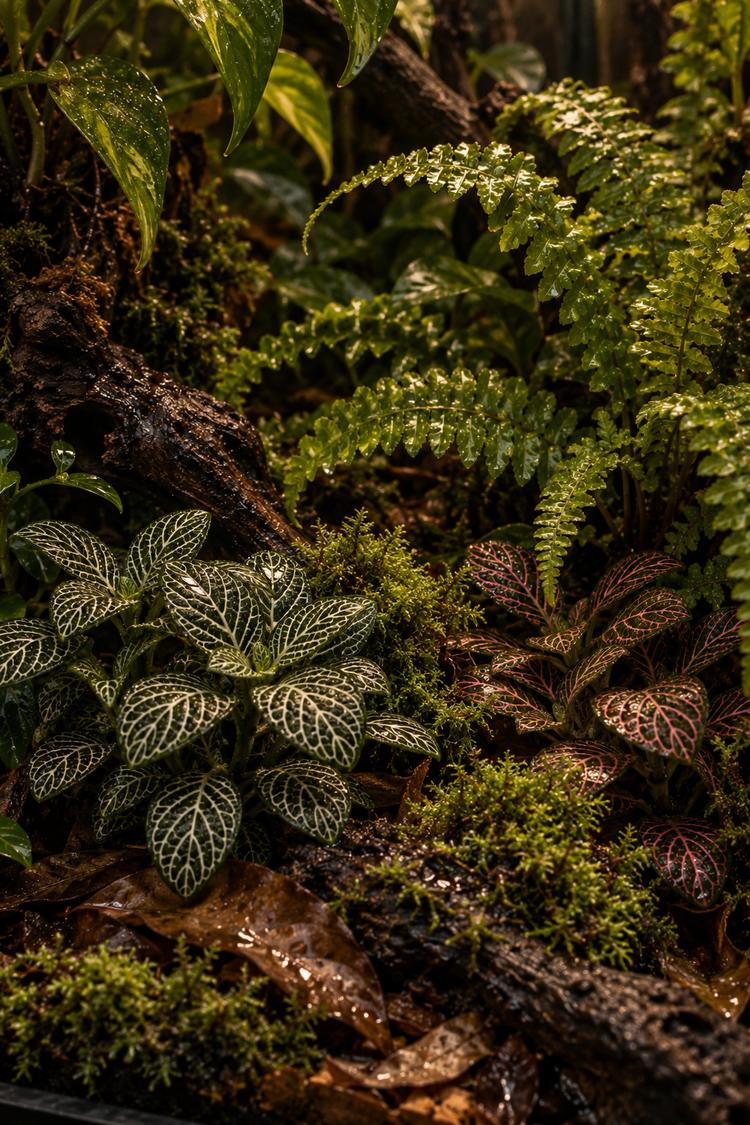
To hide a background under greenery, Ficus pumila is one of the strongest choices. Creeping fig clings to rough surfaces and spreads across cork, wood and walls. In warm, humid conditions, it makes an artificial background look mature.
Its strength is also its main drawback, because it grows aggressively. Left alone, it covers vents, small plants and décor, so pruning is part of keeping it. Ficus also releases milky, irritating sap when damaged. We would not choose it for a reptile that eats plants, but it works very well for arboreal insect-eaters.
Plants once sold as Calathea now mostly belong to the genus Goeppertia. Together with true Maranta, they are among the best choices for a richly decorated tropical enclosure. Their leaves can show dark green patterns, silver markings, pink stripes or purple undersides.
These understory plants prefer warmth, high humidity, indirect light and moist, well-drained soil. They are less forgiving than pothos, though. Poor water quality, low humidity, soggy roots or harsh light cause brown tips. When conditions suit them, they create excellent visual barriers near the floor.
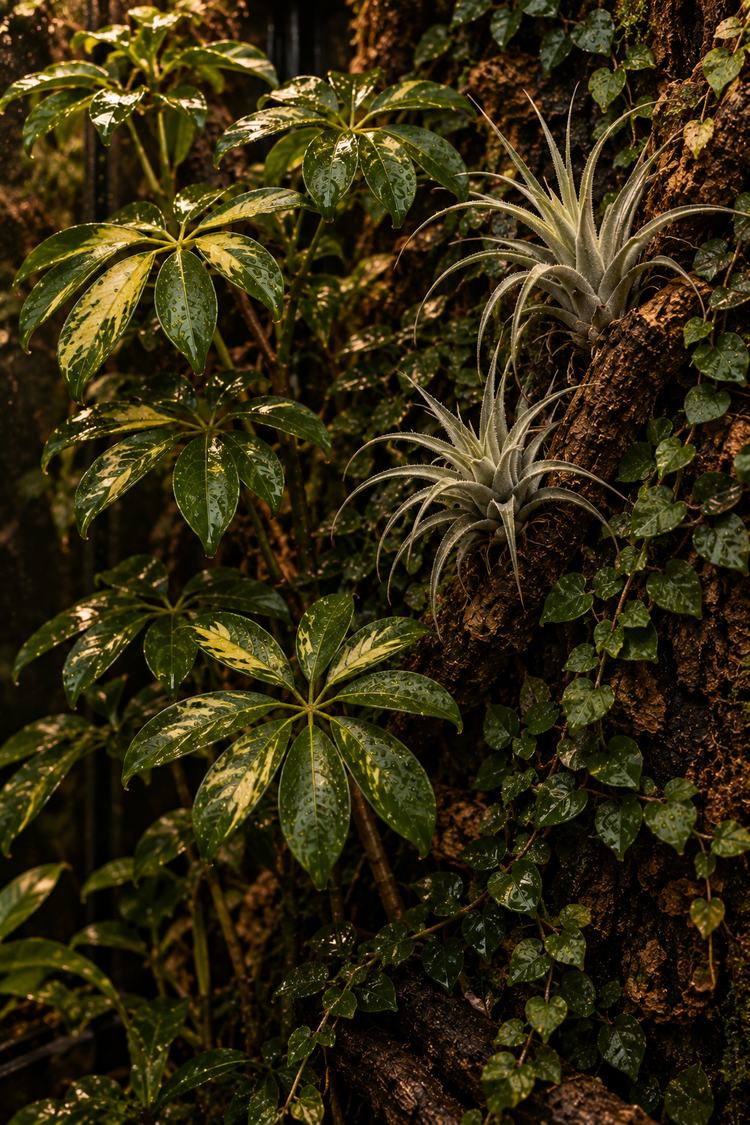
Some enclosures need plants that act almost like furniture. Compact Dracaena varieties, such as ‘Janet Craig’, grow upright, tolerate moderate light and survive regular contact. Similarly, the dwarf umbrella tree, Schefflera arboricola, forms woody stems and firm leaves that larger arboreal geckos can rest on.
Both plants deserve the same caution as pothos. Dracaena contains saponins, and Schefflera contains calcium oxalate crystals. They suit reptiles that ignore plants, but they are not edible plants.
Air plants, Tillandsia species, need no soil at all. You can wedge them into branches or mount them on cork, which makes them ideal for decorating high areas.
However, they must dry within a few hours after misting. In a constantly wet enclosure, their bases rot. Therefore, place them high, near good airflow and bright light.
Arid Plants
Humid enclosures get most of the attention, yet arid setups can be planted successfully too. The key is choosing plants that enjoy drying out, instead of making the enclosure wetter for their sake.
Snake plant, now classified as Dracaena trifasciata, is famous for being almost indestructible. Its upright, leathery leaves tolerate contact better than most tropical plants, so it suits larger animals such as ball pythons.
Its roots, however, dislike staying wet, and permanently soaked substrate causes root rot. It therefore works best in moderately humid setups, well-drained planting areas and protected pots. Like other Dracaena, it contains saponins, so keep it away from reptiles that eat leaves.
Haworthiopsis attenuata, the zebra haworthia, is one of the most useful arid plants. It stays compact, grows slowly and tolerates dry conditions. Unlike many desert succulents, it does not need intense full sun.
Its roots need excellent drainage, so let the soil dry between waterings. It is considered non-toxic to pets, and it has no dangerous spines, which makes it a low-concern choice.
Gasteria species offer the advantages of a succulent without the spines of a cactus. Their thick, fleshy leaves tolerate dry conditions, bright light, partial shade and infrequent watering. As a result, they suit semi-arid enclosures where tropical plants fail.
Root rot is the biggest risk. A Gasteria planted in moisture-retentive tropical soil and misted daily is simply in the wrong enclosure.
Matching
A good terrarium plant is part horticulture and part husbandry. The same plant can thrive with one reptile and fail with another.
For a planted crested gecko enclosure, start with pothos, bromeliads, Peperomia and spider plant. Then add Fittonia or compact ferns near the bottom if the substrate stays suitably humid. Aim for dense cover at several heights, while keeping open climbing routes.
Remember that plants do not replace load-bearing branches. A large crested gecko that jumps onto a pothos leaf still needs secure wood or cork nearby. For the full setup, see our Crested Gecko Care guide.
Day geckos thrive in bright, densely planted vertical enclosures. Good choices include bromeliads, pothos, spider plant and creeping fig. Bromeliads are especially attractive here, because they can be mounted high, where day geckos spend most of their time.
Keep foliage away from heat lamps, though. Leaves that touch a basking lamp scorch, and dense planting must never block access to basking and UVB zones. Our Day Gecko Care guide covers lighting in detail.
Ball pythons create a different problem: they are heavy. A beautiful arrangement of delicate plants can be flattened overnight.
Better choices include pothos, spider plant and snake plant. Large plants can also stay in sturdy pots buried in the substrate, which protects their roots from constant disturbance. Place delicate plants behind wood, rocks or cork, where the snake cannot crawl over them. Read more in our Ball Python Care guide.
Small arboreal and ground-dwelling geckos give you much more freedom. Peperomia, Fittonia, bromeliads and creeping fig all work well. Because the animal weighs very little, small-scale planting survives far better than it would with a snake or a large lizard.
Start with plants that naturally tolerate drying, such as zebra haworthia and Gasteria. Never make the whole enclosure humid just to keep a plant alive. If a plant needs conditions that are wrong for the reptile, change the plant, not the husbandry.
Safety
Plant safety lists deserve some skepticism. Most toxicity data come from humans, dogs, cats, livestock or laboratory mammals. Reptile-specific toxicology is far less complete.
As a result, a plant described as “pet safe” is not proven harmless to every snake, gecko, tortoise or iguana. The reverse is also true. A plant listed as toxic to cats is not automatically just as dangerous to an insect-eating gecko.
For reptiles that rarely eat plants, the main risks are often different:
For plant-eating and omnivorous reptiles, the standard should be much stricter. Use only plants known to be suitable for that species to eat.
Even if your reptile never bites a leaf, its food might. Crickets, roaches, isopods and other invertebrates eat living plants. That creates another route of exposure. For insect-eating reptiles, this is one more reason to avoid highly toxic plants and plants with an unknown pesticide history.
Some plants add risk without any real benefit:
There are enough better alternatives that none of these belong inside a reptile enclosure.
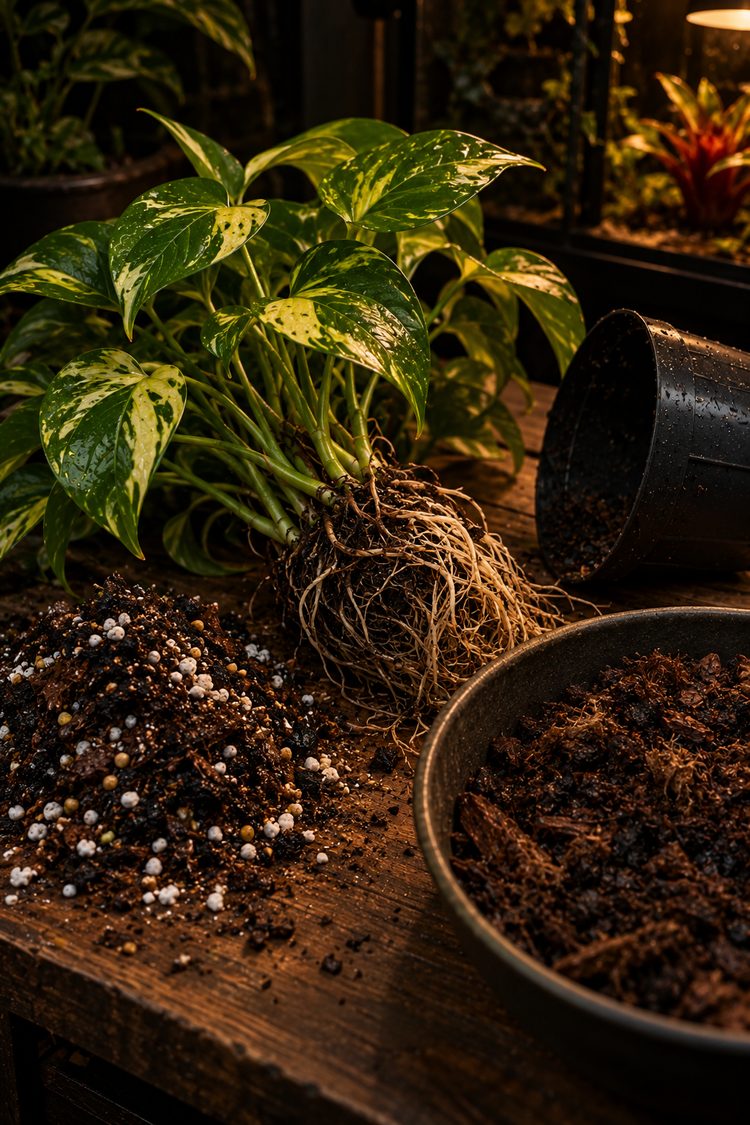
This is one of the most important steps in planting a reptile enclosure. A plant that looks healthy at a garden center may have been treated with insecticides, fungicides, miticides or growth regulators. Its pot may also contain slow-release fertilizer pellets, perlite and pests such as mealybugs, scale, fungus gnats or spider mites.
For these reasons, we never put a new plant straight into an occupied enclosure. Instead, follow this process:
Plants from a grower who can confirm they were raised without unsuitable pesticides are always the better start.
Washing does not remove every pesticide. Systemic insecticides are absorbed by the plant and carried through its tissues, so rinsing the leaves cannot wash them out. If a plant has recently been treated with a systemic product, choose different plant material with a known clean history, especially for animals that may eat it.
Even the right plant fails without enough light and healthy roots.
A common mistake is designing perfect reptile lighting while forgetting the plants. UVB lamps are not plant lights. Plants mainly need enough visible light in the wavelengths they use for photosynthesis.
A planted enclosure may therefore need a UVB source, a basking lamp where appropriate and a separate bright LED plant light. Each system does a different job. Without that LED, a beautifully planted enclosure may slowly decline under a small UVB tube and weak room light.
Light also varies a lot inside one terrarium. The canopy may be bright while the floor stays dim. So place light-hungry plants higher, and keep Fittonia, ferns and other understory plants in shaded areas. A planted terrarium needs a light gradient, just as a reptile needs heat and humidity gradients.
Many plant failures blamed on humidity are actually root problems. High humidity in the air does not mean the roots should stay soaked. Pothos, bromeliads, Peperomia, prayer plants and succulents all need oxygen around their roots. Saturated substrate turns stale and causes root rot.
Healthy planting depends on good soil structure, drainage, correct watering and ventilation. A drainage layer can help in some tropical builds, but it never replaces careful watering.
These two terms are often confused. A planted terrarium simply contains live plants. A bioactive enclosure goes further, with living substrate, microorganisms, springtails, isopods, leaf litter and nutrient cycling.
You can have plants without a bioactive system, or a bioactive substrate with very few plants. Live plants are part of most bioactive setups, but planting alone does not make an enclosure self-cleaning. Even a mature bioactive enclosure still needs regular checks.
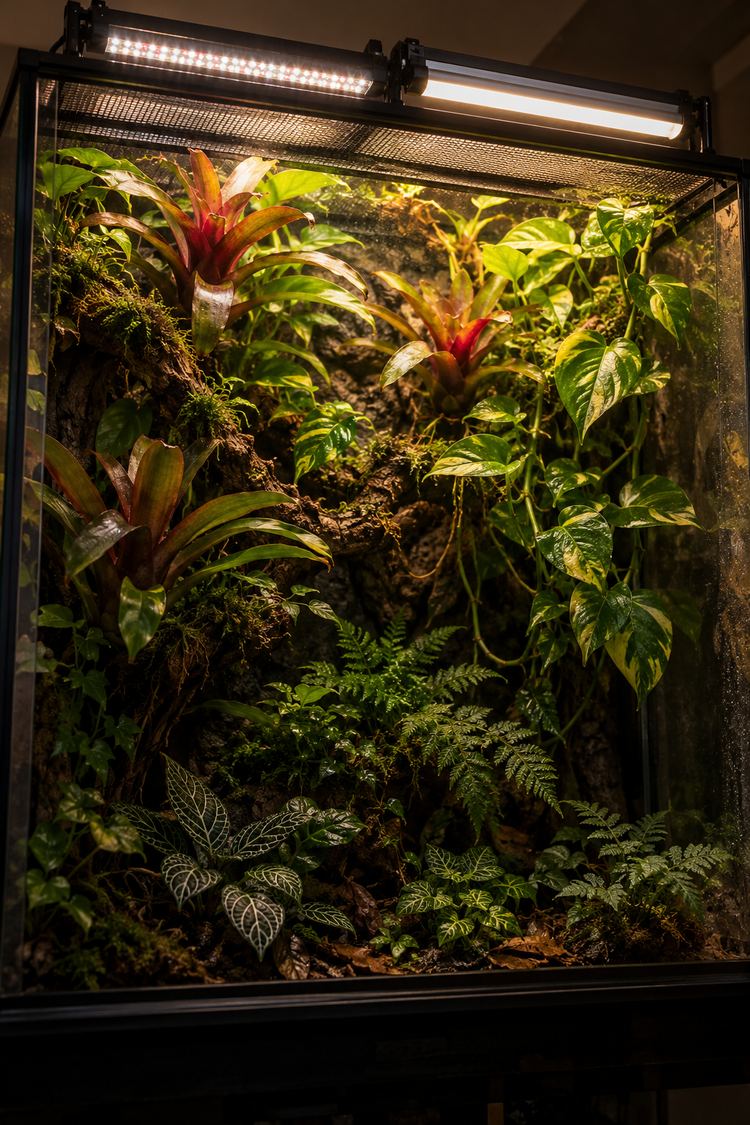
Most plant failures have predictable causes:
Most of these are easy to prevent once you know them. In short, pruning, drainage and good light keep a planted terrarium healthy for years.
What is the best plant for a reptile terrarium?
There is no single best plant. For tropical enclosures with reptiles that do not eat leaves, pothos is one of the most adaptable choices.
What plants are best for crested geckos?
Pothos, bromeliads, spider plants, Peperomia and compact ferns work well when the lighting and drainage suit them.
What plants can survive a ball python?
Choose sturdy plants. Pothos, spider plants and well-protected snake plants survive far better than Fittonia or delicate ferns.
Is pothos safe for reptiles?
Pothos is very common in terrariums for reptiles that do not eat plants. However, it contains calcium oxalate crystals and is not an edible plant.
Are fake plants better than real plants?
Neither is automatically better. Fake plants suit quarantine setups, while live plants add natural cover, humidity and a living environment.
Can I use plants from a garden center?
Yes, but never straight into an occupied terrarium. Quarantine them, remove the potting mix and avoid plants treated with systemic pesticides.
Do terrarium plants need a grow light?
Usually, yes. A UVB lamp alone rarely gives plants enough usable light for healthy growth.
Can succulents live in reptile terrariums?
Yes, in dry enclosures. Zebra haworthia and Gasteria work well, but they rot in constantly wet tropical substrate.
The best terrariums do not start with a shopping cart full of attractive plants. They start with the animal.
First, define the temperature, humidity cycle, ventilation, lighting, space and natural behavior your reptile needs. Then choose plants that thrive in exactly those conditions. A plant that only survives because you changed the enclosure away from the reptile’s needs is the wrong plant.
When the match is right, live plants become far more than decoration. They create cover, texture, shade, drinking spots and a living environment your reptile can actually use.
Choose plants for the habitat, not a habitat for the plants.

 Panther Chameleon Care: A Complete Guide to Healthy Husbandry